Agricultural regions across Vietnam face significant environmental challenges as the upcoming 2026-2027 Winter-Spring crop season approaches. According to assessments from the Ministry of Agriculture and Environment, substantial areas of farmland remain vulnerable to multiple concurrent threats. Understanding these risks is essential for farmers, policymakers, and agricultural stakeholders who must prepare adaptation strategies and resource allocation plans.
Massive Crop Areas Face Environmental Threats During Critical Growing Season
The Ministry of Agriculture and Environment has identified a concerning range of potential crop damage during the 2026-2027 Winter-Spring season. Between 424,800 and 502,300 hectares of agricultural land could experience significant impacts at peak vulnerability periods. This expansive area represents a substantial portion of the nation’s cultivated land, making the situation a priority concern for food security and rural livelihoods.
Understanding the Scale of Agricultural Risk
The projected range of affected cropland spans approximately 77,500 hectares, reflecting the uncertainty inherent in predicting environmental conditions months in advance. At the upper estimate of over 500,000 hectares, the potential impact becomes particularly alarming for regional food production and farmer income stability. This variation underscores the importance of developing flexible response strategies that can adapt to changing circumstances throughout the growing season.
Primary Environmental Stressors Threatening Farm Productivity
Three interconnected environmental challenges threaten crop viability across vulnerable regions. These stressors frequently occur simultaneously, compounding their individual effects and creating complex management scenarios for agricultural communities. Understanding each threat individually allows for more targeted prevention and mitigation approaches.
Drought Conditions and Water Scarcity
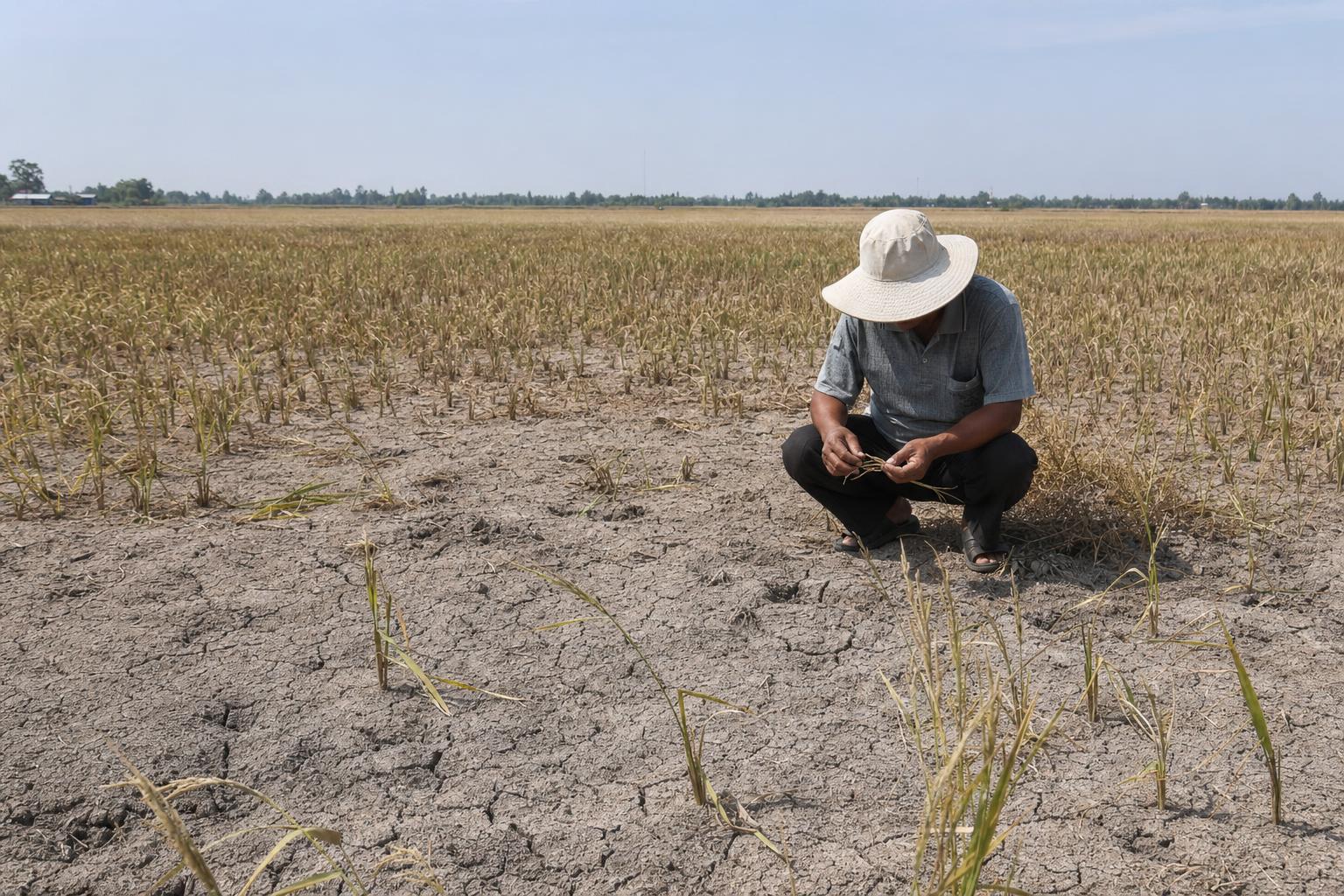
Prolonged dry periods limit water availability for irrigation, directly reducing crop yields and increasing production costs. Drought stress affects plant development at critical growth stages, potentially leading to permanent productivity losses. Because water scarcity often develops gradually, early detection systems and water conservation measures become essential tools for farmers seeking to maintain adequate moisture levels.
Saltwater Intrusion in Coastal and Delta Regions
Rising saltwater levels in agricultural areas near coastlines and river deltas create inhospitable growing conditions for most conventional crops. This phenomenon increases soil salinity to levels that damage plant roots and reduce nutrient availability. In addition, saltwater intrusion often persists for extended periods, requiring farmers to either implement specialized salt-tolerant crop varieties or temporarily abandon affected land.
Combined Impact of Multiple Environmental Stressors
When drought, water shortage, and saltwater intrusion occur together, their cumulative effects exceed what farmers could manage from any single threat alone. The timing of peak vulnerability periods suggests that these challenges may intensify simultaneously, creating particularly challenging conditions. As a result, integrated adaptation strategies addressing multiple stressors become more effective than single-focused interventions.
Implications for Food Security and Rural Communities
The potential loss of productivity across such an extensive agricultural area carries serious consequences for national food supplies and farmer economic stability. Agricultural communities in vulnerable regions may experience reduced income, increased debt, and heightened food insecurity. Therefore, proactive planning and resource allocation by government agencies and agricultural organizations become critical priorities for protecting livelihoods and ensuring consistent food availability.
Need for Adaptive Agricultural Strategies
Farmers facing these environmental challenges require access to improved crop varieties, water management technologies, and early warning systems. Consequently, agricultural extension services play an increasingly vital role in helping communities prepare for and respond to emerging threats. Investment in resilient infrastructure, soil improvement programs, and diversified farming systems offers pathways toward greater long-term stability.
The official assessment from Vietnam’s Ministry of Agriculture and Environment provides detailed regional projections that can guide localized response efforts.
Looking Forward: Preparing for Agricultural Challenges
The approaching 2026-2027 growing season demands immediate attention from agricultural planners, government officials, and farming communities. Preparation efforts should emphasize building resilience through improved water management, crop diversification, and stronger early warning systems. By addressing these environmental threats proactively, stakeholders can minimize losses and support the long-term viability of agricultural livelihoods across affected regions.